

November & December
The meadows come into flower, the rivers run high and cold with snowmelt, and there can still be old snow sitting on the passes. Days are pleasant, nights drop near freezing. This is the greenest the country gets.
Weather in the St James
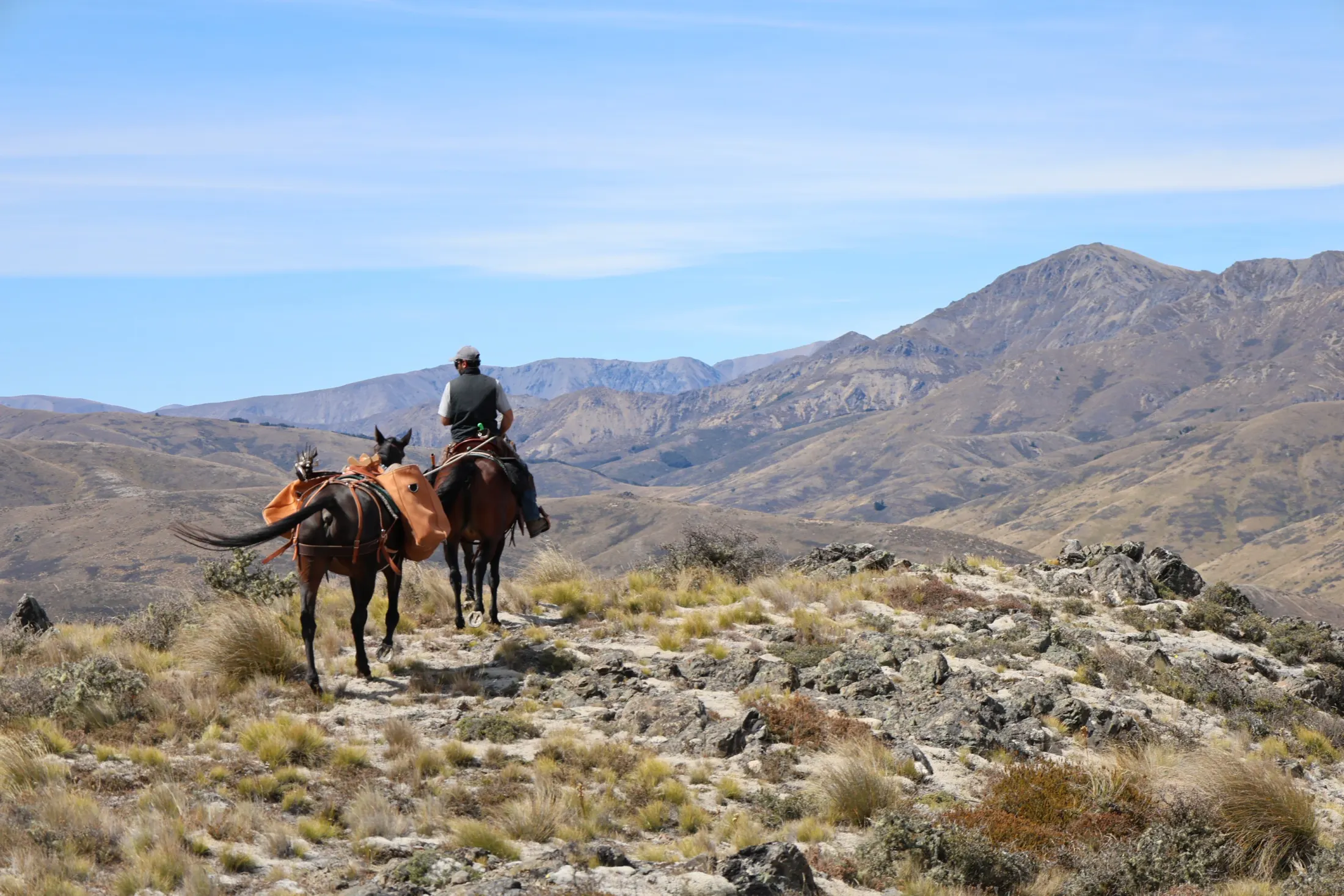
The St James sits well above Hanmer Springs and runs several degrees colder. Whatever the forecast says for town, take a few degrees off it — and expect the wind to find you on the tops.
Read the sky, not the app
A nor’wester can come through hot and hard, and a southerly can turn a warm afternoon into a wet one in half an hour.
Waterproofs come every day, whatever the sky is doing when we leave. I’d rather you carried them for three days and never used them.
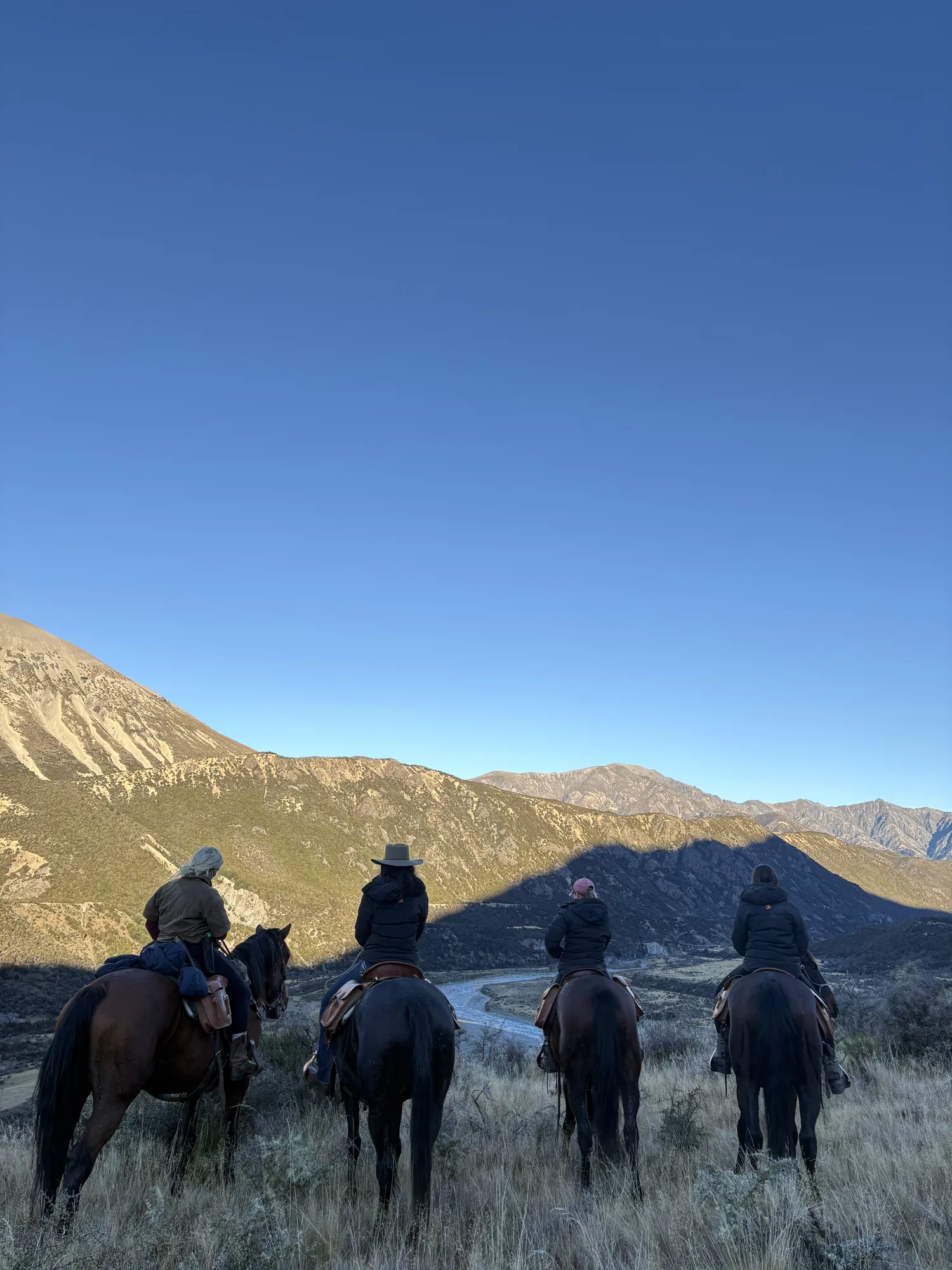 Dawn on the tops — take a few degrees off the town forecast
Written from the saddle rather than from a table of averages. Seasons run southern-hemisphere — our summer is your January.
The meadows come into flower, the rivers run high and cold with snowmelt, and there can still be old snow sitting on the passes. Days are pleasant, nights drop near freezing. This is the greenest the country gets.
The warm months, and usually the settled ones. Days in the high teens down in the valley, sometimes into the twenties on a still one, always cooler on the tops. Hot sun, brutal UV, rivers at their lowest and friendliest. Nights still fall into single figures. The sandflies are at their most enthusiastic around the pools — bring repellent and don’t be shy with it.
My pick, if you’re asking. The tussock turns gold, the light goes long and low, the crowds have gone home and the nights are cold and clear enough for the kind of star cover people fly a long way to see. Expect frost by the end of the month.
Sharp and quiet. Hard frosts in the morning, short days, the first new snow possible on the tops. Beautiful, and cold enough that your sleeping bag matters.
The turn. Still often clear and settled, but the cold has arrived properly and the light is gone by mid-afternoon. Snow starts sitting on the tops and staying there. Rivers drop as the rain turns to snow higher up.
Deep winter, and the trip I’d send anyone on who asks what this country is really like. Days at or below freezing on the tops, nights below it. We have about nine hours of daylight, so the riding days are shorter and we start when it’s light rather than when it’s early. In exchange: no one else out there, air you can see for fifty kilometres through, and a hot pool in the snow, which is a thing everybody should do once. There is usually no full snow cover at the level we travel and camp — it sits on the tops and the slopes.
Still full winter, but the light is coming back and the days lengthen noticeably through the month. Often the most settled snow of the season, and often the coldest and snowiest month of the year. Same cold, slightly more of the day to enjoy it in.
The thaw. The country wakes up, the first green comes through the tussock, and the rivers start rising with melt. The most changeable month of the year — it can give you a blue spring day and a snowstorm in the same trip. Ground can be soft and heavy going.
Spring in earnest. Snowmelt has the rivers up and cold, the tops are still holding snow, and the valley floors are green and coming alive. Long days again. Wet feet more likely than any other month.
We are happy to ride in almost any weather, as long as you have the right gear and some outdoor experience behind you. Rain, wind and cold are not reasons to stay home — some of the best days out here have been the ugliest ones on paper, and the hot pools have never once been better than in bad weather.
But there are lines we don’t cross, and we decide them from the forecast before we leave — rather than at the road end with a few hopeful faces in front of us. We don’t travel if:
If the overnight low is forecast under minus five, we don’t travel. Camp at that temperature stops being an experience and starts being an endurance test.
About 90 km/h. The tops are where the wind finds you, and there is nowhere up there to get out of it.
A wet afternoon is part of it. Heavy precipitation forecast to sit over us for the full trip is not — nothing dries, and nothing gets better.
Cold plus strong wind plus rain or snow is a different animal from any one of them alone. This is the one that catches people out.
Minus two is fine. Minus two with a gale and sleet is not.
It is the combination that does the harm — Milo
Before you book flights
This matters most in winter and the shoulder seasons, when the weather turns on short notice. If your trip has to move, I want us to be able to move it — so if you have any give in your travel dates, hold onto it, and try not to book a flight out of the country for the morning after we’re due back.
Your safety and your comfort come ahead of the schedule, every time. I would much rather ring you three days out and shift you to a better window than take you somewhere miserable and watch you endure it.
A note for winter riders · May to October
We don’t ride into anything colder than minus five overnight — but the burner goes out while you sleep, and that is the night your sleeping bag earns its place.
Bring a proper four-season bag, something with a comfort rating of minus five or better. Our hire bags are rated to 0°C and won’t cut it in winter — tell me early if you need me to source you something warmer.
The tipi and the fire do a lot of work. They can only work with what you bring.
 Frost on the flats, snow on the tops — a normal winter start
Not sure which month suits you? Tell us your window and we’ll tell you what it’s likely to be doing.
The mountains are waiting